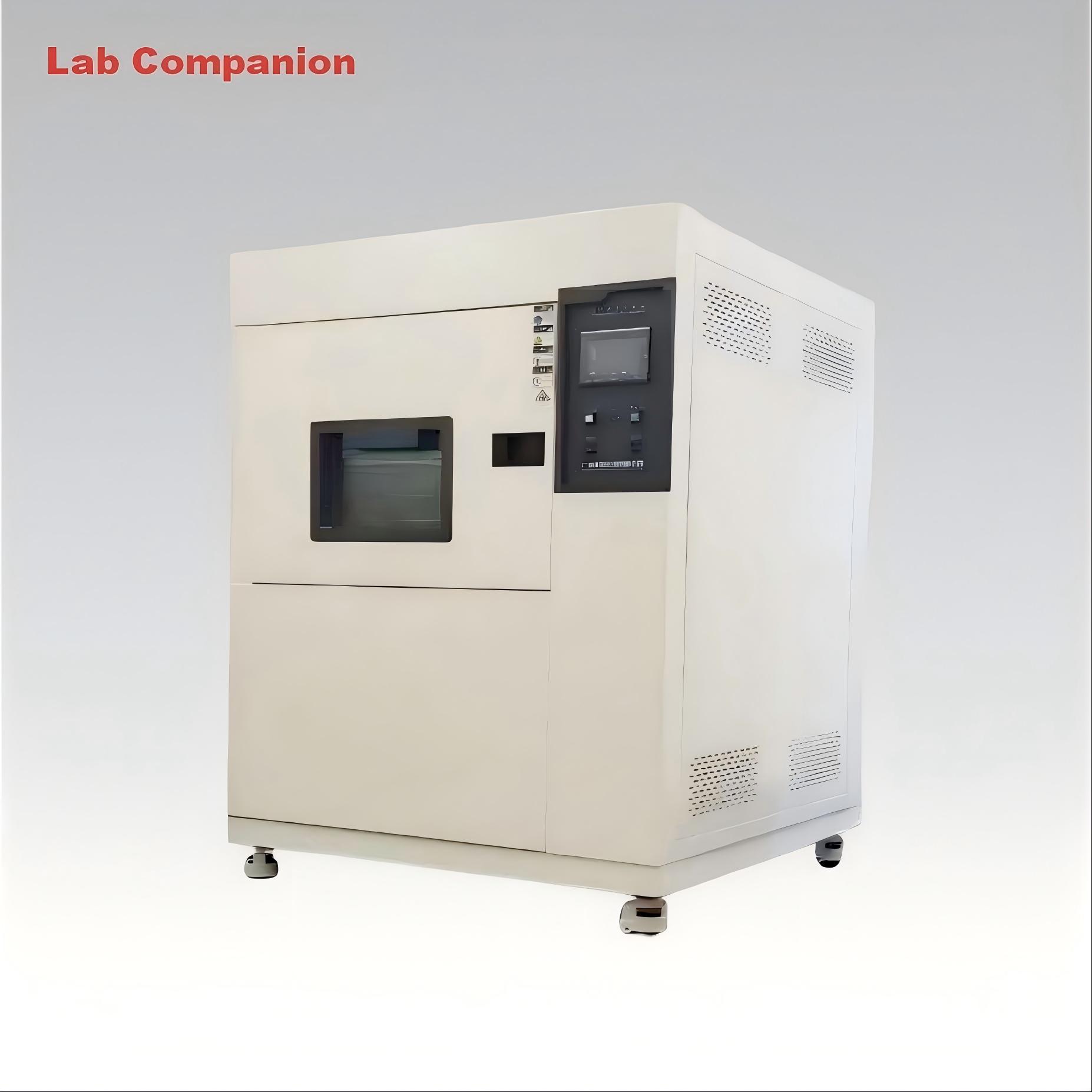
The three-zone thermal shock test chamber is core equipment for simulating extreme temperature change environments. Its stability directly affects test data accuracy and service life. Daily maintenance shall target fault prevention, precision assurance and service life extension, focusing on the upkeep of key systems. Key points are as follows:
I. Daily Maintenance Key Points for Core Systems
1. Refrigeration System: Ensure Cooling Efficiency & Operational Safety
Check the refrigerant pressure gauge weekly to maintain pressure within the calibrated range (high pressure: 0.8–1.2 MPa; low pressure: 0.1–0.3 MPa). Troubleshoot leaks promptly if abnormalities are detected.
Clean condenser fins monthly: Use compressed air (≤0.4 MPa) to blow dust from inside to outside for air-cooled models; ensure clean, scale-free cooling water and inspect cooling towers/filters regularly for water-cooled models.
Inspect the smooth operation of solenoid valves and expansion valves quarterly. Disassemble and clean valve cores if jamming occurs.
2. Heating System: Ensure Uniform Heating & Electrical Safety
Check heating tube terminals and measure insulation resistance (≥2 MΩ) daily before testing to prevent electric leakage or uneven heating.
Test SSR output voltage with a multimeter monthly.
Disassemble the heating chamber semi-annually to remove debris and carbides, ensuring efficient heat transfer.
3.Water Circuit & Sealing System: Maintain Circulation Stability & Temperature Field Sealing
Replace deionized water in the circulation tank weekly and keep the water level ≥ 2/3 of the tank volume.
Dismantle filter cartridges monthly, soak in 5% citric acid for 30 minutes, and rinse to remove scale.
Inspect door seals daily, wipe clean with alcohol cotton, and replace immediately if damaged.
4. Mechanical & Electrical Systems: Ensure Smooth Switching & Precise Control
Lubricate sample rack slides monthly with high-temperature grease (-40℃~200℃ resistance) and tighten door hinges/latches.
Calibrate air damper switching mechanisms quarterly, fasten distribution box terminals, and measure grounding resistance (≤4 Ω).
Wipe the control panel with a dry cloth daily; avoid corrosive solvents.
II. Periodic Maintenance Specifications
Daily/Post-test: Clean residues and moisture in the test chamber; inspect drain pipes; verify intact door seals and clear space around the equipment.
Weekly/Monthly: Check refrigeration system pressure and clean condensers; inspect heating system electrical connections; replace tank water and clean filters.
Quarterly/Semi-annually: Calibrate temperature sensors and controllers (error ≤±0.5℃); remove impurities from air ducts and fans; test sensitivity of safety devices (over-temperature protection, leakage protection, etc.).
Annual Maintenance: Performed by professional engineers, including refrigeration pipeline leak detection, compressor oil inspection, heating element testing, and full-system metrological calibration.
III. Critical Precautions
Power off and cool the chamber to room temperature before maintenance to avoid high-temperature/high-pressure hazards. Contact suppliers for professional operations (refrigerant refilling, sensor calibration, etc.).
Place the equipment in a well-ventilated area with ≥1m heat dissipation space around it; keep away from heat sources, water sources and dust; ensure stable power supply voltage.
Sample loading capacity ≤ 1/3 of the working chamber volume to prevent air duct blockage. Drain the water tank if the equipment is idle for over 1 month; power on monthly for 1 hour to prevent moisture buildup.
Establish a maintenance log to record upkeep details and troubleshooting measures, supporting the full-life cycle management of the equipment.
Systematic maintenance as above can reduce failure rates by over 60%, extend service life by 3-5 years, ensure reliable test data, and support product environmental adaptability testing.




 एक कहावत कहना


 IPv6 नेटवर्क समर्थित